- Forms
- Reporting Procedures
- Emergency Information
- Training and Resources
- Helpful Web Links
- Standard Operating Procedures
PROBLEM WITH THIS WEBPAGE?
Report an accessibility problem
To report another problem, please contact sarah.younk@marquette.edu.
Animal Research
Research involving animals must be approved by Marquette's Institutional Animal Care and Use Committee (IACUC). The IACUC ensures that all research involving vertebrate animals is performed ethically and in accordance with all regulating agencies. Currently Marquette University has full accreditation from the Association for Assessment and Accreditation of Laboratory Animal Care (AAALAC).
For additional information on Marquette's policies regarding animal research, please refer to the Office of Research Compliance webpage on Animal Research.
Asbestos Management
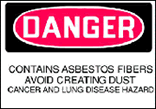
The purpose of this program is to establish methods for management of asbestos-containing material (ACM) on campus as well as provide safety training and promote awareness. The asbestos protocol covers the identification, maintenance and removal of regulated asbestos containing material in university facilities. This program is intended to comply with state and federal asbestos regulations, including the standards of EPA and OSHA. A Campus Inventory Database of potential asbestos-containing materials is kept up to date to ensure nothing is overlooked.
Asbestos is a serious health hazard commonly found in our environment today, thus it is highly important for employees to know where it is likely to be found and how to avoid exposure, and to have an adequate understanding of the associated hazards.
Asbestos is the name applied to a group of naturally occurring minerals that are mined from the earth. The six different types of regulated asbestos are:
 Amosite
Of these six, three are used more commonly. Chrysotile (white) is the most common, but it is not unusual to encounter amosite (brown/off-white) or crocidolite (blue) as well. In many instances a single product will have a mixture of different asbestos types.
All types of asbestos can break into very tiny fibers. These individual fibers can be broken down so small that they can only be identified using an electron microscope. Some individual fibers may be up to 700 times smaller than the diameter of a human hair. Because asbestos fibers are so small, once released into the air, they may stay suspended there for hours or even days.
Asbestos fibers are virtually indestructible. They are resistant to chemicals and heat, and are very stable in the environment. They do not evaporate into air or dissolve in water, and they are not broken down over time. Asbestos is probably the best insulator known to humans. Because asbestos has so many useful properties, it has been used in more than 3,000 different products.
Usually asbestos is mixed with other materials to actually form the products. Floor tiles, for example, may contain only a small percentage of asbestos. Depending on what the product is, the amount of asbestos in asbestos-containing materials may vary from less than 1 percent to 100 percent.
Asbestos may be found in many different products and many different places. Examples of products that might contain asbestos are:
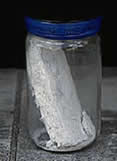
At Marquette, asbestos is most likely to be found in:
The most common way for asbestos fibers to enter the body is through breathing. In fact, asbestos-containing material is not generally considered to be harmful unless it is releasing dust or fibers into the air where they can be inhaled or ingested. Many of the fibers will become trapped in the mucous membranes of the nose and throat where they can then be removed, but some may pass deep into the lungs, or, if swallowed, into the digestive tract. Once they are trapped in the body, the fibers can cause health problems.
For further information on the Health Effects of Asbestos, follow the link.
Asbestos is most hazardous when it is friable. The term "friable" means that the asbestos is easily crumbled by hand, releasing fibers into the air. Sprayed-on asbestos insulation is highly friable. Asbestos floor tile generally is not. Asbestos-containing ceiling tiles, floor tiles, undamaged laboratory cabinet tops, shingles, fire doors, siding shingles, etc. will not release asbestos fibers unless they are disturbed or damaged in some way. If an asbestos ceiling tile is drilled or broken, for example, it may release fibers into the air. If it is left alone and not disturbed, it generally will not. Asbestos pipe and boiler insulation does not present a hazard unless the protective canvas covering is cut or damaged in such a way that the asbestos underneath is actually exposed to the air.
Damage and deterioration will increase the friability of asbestos-containing materials. Water damage, continual vibration, aging and physical impact such as drilling, grinding, buffing, cutting, sawing or striking can break the materials down, making fiber release more likely.
To avoid being exposed to asbestos, you must be aware of the locations it is likely to be found. If you do not know whether something is asbestos, assume that it is until it is verified otherwise. Remember that you cannot tell if floor or ceiling tiles contain asbestos just by looking at them. Never try to take a sample yourself unless you are licensed to do so.
The Marquette Facilities Services Department has a licensed asbestos abatement contractor that can take samples from materials to determine whether they contain asbestos. If you need to have materials analyzed or tested for asbestos, contact your coordinator.
If you do not know that a building material is asbestos free, DO NOT DISTURB IT.
Never:
...any building materials or equipment that has not been proved asbestos free by a certified inspector.
If you need to do work that might involve asbestos (lifting ceiling tiles, repairing insulated pipelines, etc.), check with your coordinator to find out what can be done safely.
For example, before moving any ceiling tiles to perform maintenance work, it will be necessary to ensure they do not contain asbestos. If they do contain asbestos, they will need to be removed by licensed asbestos abatement workers before the work may be performed.
Housekeepers and custodians should never sand or dry buff asbestos-containing floor tiles, and only wet stripping methods may be used during stripping operations. Low abrasion pads should be used at speeds below 300 rpm.
Broken and fallen ceiling tiles should be left in place until identified. Only after they have been identified as asbestos free may they be removed. Asbestos tiles will be removed by asbestos abatement workers. Broken and damaged asbestos floor tiles must also be removed by asbestos abatement workers.
It is important to report any damaged asbestos-containing materials to your coordinator immediately. Do not attempt to clean up spills yourself!
By knowing where asbestos is likely to be located and then taking measures not to disturb it, you will protect yourself and others from exposure to this hazardous substance.
OSHA began regulating workplace exposure to asbestos in 1970. In the mid-1980s, the EPA's Asbestos Hazard Emergency Response Act (AHERA) heightened the public's awareness of asbestos. Over the years, more information on the adverse health effects of asbestos exposure has become available. This prompted OSHA to revise the Occupational Exposure to Asbestos standard (29 CFR 1926.1101, August 1994). In November 2000, the EPA adopted by reference the OSHA standards, thereby intending the same protection to state and local government-sector workers as that provided to private-sector workers. The OSHA standard, the EPA Toxic Substances Control Act (40 CFR 763, Section 6), and to some extent the EPA AHERA standard, dictate asbestos management policies and practices at Marquette University.
For further information, refer to Marquette’s Asbestos Awareness Training Program (PowerPoint presentation).
Biosafety
Institutional biosafety concerns the use of recombinant DNA technology (rDNA) and organisms and viruses containing rDNA (transgenic organisms). All research utilizing rDNA must be registered with the Office of Research Compliance. Marquette University's Institutional Biosafety Committee (IBC) is tasked with reviewing all rDNA research conducted at or sponsored by Marquette for compliance with the NIH guidelines.
For additional information regarding Marquette's Institutional Biosafety Committee, please refer to the Office of Research Compliance webpage on Biosafety.
PLEASE NOTE: The Institutional Biosafety Committee ultimately determines the correct biosafety level for each project. Therefore, all investigators must submit the IBC registration form even if they believe their project is exempt.
Bloodborne Pathogens
Workers in many different occupations are at risk of exposure to bloodborne pathogens, including hepatitis B, hepatitis C and HIV/AIDS. First-aid team members, housekeeping personnel in some settings, nurses and other health care providers are examples of workers who may be at risk of exposure.
To address these risks, Marquette University has developed a BBP Exposure Control Plan
Bloodborne Pathogens Training
References and Resources
The following references aid in recognizing and evaluating bloodborne pathogen hazards and provide possible solutions for these hazards.
Chemical Inventory System
On Marquette's campus, thousands of chemicals are used, dispensed, transported and disposed. To oversee the handling and storage of these chemicals, Marquette University has procured the chemical inventory database system, Chemical Inventory System (CHIMERA).
The CHIMERA system enables Marquette to track chemical containers “cradle to grave.” This inventory system is tied into the product catalogs of major chemical suppliers and enables users to look up product and hazard information including safety data sheets (SDS). In addition, the system identifies a chemical’s National Fire Protection Association (NFPA) codes and the chemical’s hazard classification storage number. This will assist the labs in developing user-friendly chemical storage systems and will address storage incompatibilities.
The system also enables Marquette to generate Department of Homeland Security chemicals of interest reports, Fire Code reports and EPA reports. The CHIMERA system will help Marquette track particularly hazardous substances and their accompanying standard operating procedures.
Confined Space Entry Program
Contractor Safety
The safety policy of Marquette University is to provide for the protection of its faculty, staff, students, visitors, facilities and surrounding environment through the development and implementation of a comprehensive safety program.
Contractors are required to also provide safe workplaces and implement their own safety programs. Marquette has prepared a Contractor Safety, Health and Environmental Guidebook to assist in coordinating Marquette facilities and contractor operations during construction, renovation projects and maintenance.
Additionally, contractors are required to comply with all applicable federal, state and local laws and university policies and follow safe work practices for the construction trades.
Electrical Safety
To protect employees working in and around energized electrical conductors, Marquette University has developed an electrical safety program. No university employees or contractors engaged by Marquette are permitted to work on energized equipment unless:
Marquette's policy is to avoid energized work whenever possible. Appropriate planning and coordination shall be completed to ensure that systems are de-energized.
Ergonomics
Chair
Keyboard
Monitor
Workstation Layout
Personal Habits
If you have discovered areas that need to be changed in your work setting, please contact your supervisor and the Office of Risk Management for ergonomic review of your workstation.
Foot Rest
Wrist Rest
Monitor Stand
Back Support
Creativity and imagination are the key!
Fall Protection Program
Fire Safety
Note: Only trained personnel should use fire extinguishers. Your safety is more
important than property damage. Individuals should leave the area and allow
trained emergency personnel to extinguish fires.
Hazard Communication
The Hazard Communication Standard affects everyone who manufactures, distributes, provides, uses or stores hazardous chemicals in the workplace.
Note: The following text for 1910.1200 has been updated to align with the U.N. Globally Harmonized System of Classification and Labeling of Chemicals (GHS). Revision 3, issued in the Federal Register, March 16, 2012.
By law, chemical manufacturers or distributors must determine the physical and health hazards of each product that they make or distribute. Then they must let users know about those hazards by using container labels and SDSs.
Employers must develop a Written Hazard Communication Program. They must also:
Employees must take positive actions to protect themselves as well. They must read labels, SDSs and follow their instructions and warnings.
OSHA has developed these safety regulations and Marquette University has developed a compliance program to protect you. The only person who can keep you safe on the job, however, is YOU!
Make these rules part of your job:
Every container of hazardous chemicals is labeled by the manufacturer. The actual format may differ, but the labels must contain similar types of information. That makes it easy to find out at a glance about the chemical’s possible hazards, and the basic steps you can take to protect yourself against those risks.
The label may use words or symbols to tell you:
If using an unlabeled container, notify your supervisor and ask for instructions. The label contains valuable information but if you don’t find everything you need, refer to the SDS.
To determine if a chemical is hazardous, check the container’s label. There are different types of labels, but all will tell you if a chemical is hazardous. Many Marquette University chemical substances may contain a hazard coding label. Read the labels on all containers and follow all instructions. If you have questions, ask your supervisor or refer to the SDS.
Marquette maintains labels, as provided by manufacturers or distributors, on containers of hazardous chemicals and will not remove or deface existing labels on such containers. When transferring a chemical from one container to another, the new container must be labeled properly. Empty containers that may be reused for other purposes must have their original labels removed or obliterated and relabeled as shown below:
An SDS is a written or printed data sheet concerning a chemical that is prepared and distributed by chemical manufacturers and/or distributors.
Updates of SDSs on campus are done as new or updated manufacturer SDSs are received. New materials introduced into work areas will be controlled by the appropriate departments. SDS files are maintained throughout our facilities for all hazardous chemicals used in work areas.
SDSs are in English and available to all employees and contain the following:
The SDS will provide you with everything you need to work safely with chemicals. SDSs may differ in length, but you will find a summary of everything that’s known about the chemical, its hazards, and precautions to take to avoid injury and illness when handling that particular hazardous substance.
Read the SDS before using a chemical substance.
Employee Training: employers must provide employees with effective information and training regarding hazardous chemicals in their work area prior to starting work, and whenever a new physical and/or health hazard is introduced into the work area. The following information must be covered: Hazard Communications Training
The official list of hazardous chemicals known to be present in the Marquette University workplace can be found in the Department of Environmental Health and Safety. Employees may contact their supervisors or the Department of Environmental Health and Safety regarding chemicals used in their jobs.
Marquette purchase orders will contain a brief description of the contractor’s responsibilities. Contractors bringing hazardous chemicals on site are responsible for providing SDSs with appropriate hazard information. Marquette employees working in the vicinity of the contractor’s work site may review the contractor’s SDSs. In turn, SDSs of Marquette chemicals used at the work site may be reviewed by the contractor’s employees.
Not all university areas are subject to this standard and hazardous materials are generally identified. If you have questions regarding your department, please contact Environmental Health and Safety.
All users of chemicals and their supervisors in all university departments should be aware of the hazardous substances holding areas in Chemistry and Biology. EH&S has a program in place for chemical and hazardous waste disposal from these sites. Marquette is a small-quantity generator under the federal act and must comply with regulations.
The regulations require that the name of each chemical to be stored and/or to be disposed must be clearly marked on each container. As a general rule, chemicals should not be combined; however, in situations where that is acceptable, all substances included must be clearly marked and dated on the container. The date of the accumulation of the stored material must also be clearly marked.
In the case where the exact chemical information is not known, we have contracted with certified laboratories to test the substances. If the composition is unknown, this must also be clearly marked and dated as to placement in any storage or disposal container. Individuals from Chemistry and Biology will assist in log maintenance and shall be trained in the proper protocols for handling these substances.
Marquette’s Hazard Communication program is designed to ensure safe handling of chemicals on the job and may also be helpful to you at home. Contact your supervisor or the Department of Environmental Health and Safety if you have any questions about this program or safe handling of chemicals on the job.
Marquette follows a “least risk” policy for all hazardous materials procured, received, handled, stored and disposed of. This means that only the quantity of material absolutely necessary should be on hand.
Hot Work Program
Hot work is defined as any temporary operation involving open flames or producing heat and/or sparks that includes but is not limited to brazing, open-flame soldering, oxygen cutting, grinding, arc welding, cutting, thawing, oxy-fuel gas welding, hot taps and torch-applied roofing.
No employee of Marquette University, contractor hired by Marquette University or subcontractor hired by the contractor shall perform any hot work unless a hot work permit is obtained.
Lockout / Tagout
"Lockout/Tagout (LOTO)" refers to specific practices and procedures to safeguard employees from the unexpected energization or startup of machinery and equipment, or the release of hazardous energy during service or maintenance activities.
Approximately 3 million workers service equipment and face the greatest risk of injury if lockout/tagout is not properly implemented. Compliance with the lockout/tagout standard (29 CFR 1910.147) prevents an estimated 120 fatalities and 50,000 injuries each year. Workers injured on the job from exposure to hazardous energy lose an average of 24 workdays for recuperation. In a study conducted by the United Auto Workers, 20 percent of the fatalities (83 of 414) that occurred among their members between 1973 and 1995 were attributed to inadequate hazardous energy control procedures, specifically, lockout/tagout procedures.
For additional information, refer to OSHA's Safety and Health topic page:
Machine Guarding
Rotating equipment or apparatuses that can trap clothing, hair or body parts include: vacuum pumps, centrifuges, mechanical stirrers and rotary evaporators; hazardous grinding, drilling, and cutting equipment in shops.
All machines consist of three fundamental areas: the point of operation, the power transmission device and the operating controls. Despite all machines having the same basic components, their safeguarding needs widely differ due to varying physical characteristics and operator involvement.
The following OSHA Standards have been established to ensure the safety of machine operators and other employees in the area:
Prior to operating a piece of equipment or machinery, an operator must be formally trained and authorized to operate that specific piece of equipment. Operators must not remove guards or tamper with safety interlock devices. All machine operators must be equipped with appropriate personal protective devices: glasses, gloves, goggles or face shield.
The following resources aid in recognizing and evaluating machine guarding hazards and provide guidelines for control measures.
Mercury Program
Mercury is a persistent, bio-accumulative toxin with a complex environmental behavior in air, water and soil. Mercury can cause a variety of harmful health effects, including damage to the brain, central nervous system and kidneys and is particularly harmful to children, prenatal life and infants through the toxin's exposure to both pregnant and nursing women. The element's unique and interesting properties have proven it to be a useful asset in a variety of laboratory and commercial practices. However, given that many safe alternatives to mercury exist, it is now understood that the overall health and environmental risk associated with its continued use far surpass any benefit.
Mercury is one of the most significant environmental toxins found in the United States, and has been targeted by the Environmental Protection Agency as a persistent global pollutant that must be reduced. The ability of mercury to bio-accumulate in the environment and tissue makes it particularly hazardous to humans and animals. Marquette University's mercury reduction plan has been developed in order to reduce the risks and costs associated with mercury contamination. The university recognizes the threats presented by mercury and is committed to its reduction/elimination throughout campus.
In 2007 Marquette embarked on mercury reduction program to address the serious environmental and human health risks posed by the release of mercury into the environment. The program sought to reduce the potential health and environmental risks to the campus and the surrounding community. The program involves replacing mercury thermometers and other mercury-containing devices with non-mercury alternatives. The Department of Environmental Health & Safety worked with the university’s Laboratory Safety Group to ascertain and evaluate all mercury sources on campus and identify ways to reduce the use of mercury. A variety of uses of mercury-containing equipment were found, including fluorescent light bulbs and mercury-containing switches, barometers, lamps, laboratory bubblers and thermometers.
Without question, mercury is the most frequently spilled in the form of broken thermometers. The thermometer exchange program was initiated to eliminate this easily avoidable risk of laboratory contamination and costly cleanup. Safe, non-toxic and environmentally friendly thermometers are a perfectly viable alternative to mercury-based units. Please complete this form to request an exchange.
Mercury-containing devices are used in many laboratory settings. Mercury thermometers are commonly encountered, but other devices potentially containing mercury include manometers, sphygmomanometers, barometers and electrical components. They are easy to use, relatively inexpensive, accurate and reliable. Unfortunately, they are also fragile, increasing the likelihood of a mercury release if the devise is broken. The Mercury Reduction Program calls for all non-essential uses of elemental mercury to be eliminated from campus laboratories. EH&S provides the recommendations and goals in reducing the use of mercury and mercury containing devices in laboratories:
Mercury is toxic to the human nervous system. The developing brains of fetuses and infants are especially sensitive to mercury’s toxic effects. Mercury can be particularly hazardous because it can be easily absorbed through the lungs and into the bloodstream. Exposure to mercury vapors can occur when mercury products (such as thermometers and fluorescent lamps) are broken. Even very small amounts of mercury (several drops) may raise air concentrations to levels that may be harmful to human health.
Elemental mercury is a shiny liquid, silver-white in color and has many useful properties. It is the only metal that is liquid at room temperature. Mercury combines easily with other metals, is a good conductor of electricity, and expands and contracts evenly with temperature changes. As a result, mercury has been used in many household, medical and industrial products such as thermometers and barometers, thermostats and old latex paints. Elemental mercury when spilled at room temperature can break up into small droplets and evaporate to form mercury vapor. The higher the room temperature, the more mercury vapors will be released. Mercury vapors are also heavier than air and may linger in higher concentrations at the site of the spill.
Always call Environmental Health & Safety (414) 288-8411 for assistance whenever you have a mercury spill. After evaluation, EH&S will contact a professional emergency response contractor to come in and properly clean up the spill.
Personal Protective Equipment
OSHA requires the use of personal protective equipment (PPE) to reduce employee exposure to hazards when engineering and administrative controls are not feasible or effective in reducing these exposures to acceptable levels. Employers are required to determine if PPE should be used to protect their workers.
If PPE is to be used, a PPE program should be implemented. This program should address the hazards present; the selection, maintenance and use of PPE; the training of employees; and monitoring of the program to ensure its ongoing effectiveness.
Radiation Safety
The use of radioactive materials at Marquette University is authorized by the Department of Health and Family Services of the State of Wisconsin (DHFS). The use and possession of radioactive sources at Marquette is controlled and administered by the Radiation Safety Committee (RSC). Only authorized users, who are Marquette faculty and staff, can obtain radioactive material for use in their research laboratories.
Please refer to the Office of Research Compliance website for information specific to Marquette's policies on Radioisotopes.
The following link to OSHA information about non-ionizing and ionizing radiation in the workplace.
 |
Non-Ionizing Radiation
|
 |
The two types of ionizing radiation are particulate (alpha, beta, neutrons) and electromagnetic (X-rays, gamma rays) radiation. |

Privacy Policy Legal Disclaimer Non-Discrimination Policy Accessible Technology
© 2026 Marquette University